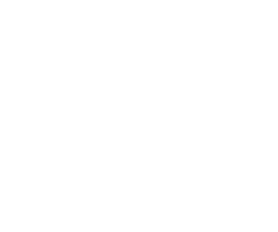
The CNOT gate is one of the most important -qubit gates and is represented in the standard basis by the following matrix:
:.
The operator is Hermitian and unitary, and can be rewritten as a block matrix in the form:
:,
where are the identity and null matrices respectively and is the Pauli matrix
:.
We can also rewrite the action of on two qubits operationally. We take two qubits and , where the former is the so-called ''control qubit'' and the latter is the ''target qubit''; then the action of on the system of the two qubits is:
:
where .
The CNOT together with the [[Hadamard gate]] and all [[Quantum gates|phase gates]] form an infinite ''[[Quantum gates|universal set of gates]]'', i.e. if the CNOT gate as well as the Hadamard and all phase gates are available then any -qubit unitary operation can be simulated exactly with such gates.
[[Category:Evolutions and Operations]]
[[Category:Models of Quantum Computation]]
